
What Bumble's Fire Sale Tells You About This Market
Reuters reported that Bumble has hired Morgan Stanley to explore a sale. The read for operators is not that the category is dying. It is that a price discovery event is about to open the M&A window for everyone else.
From the Editor.
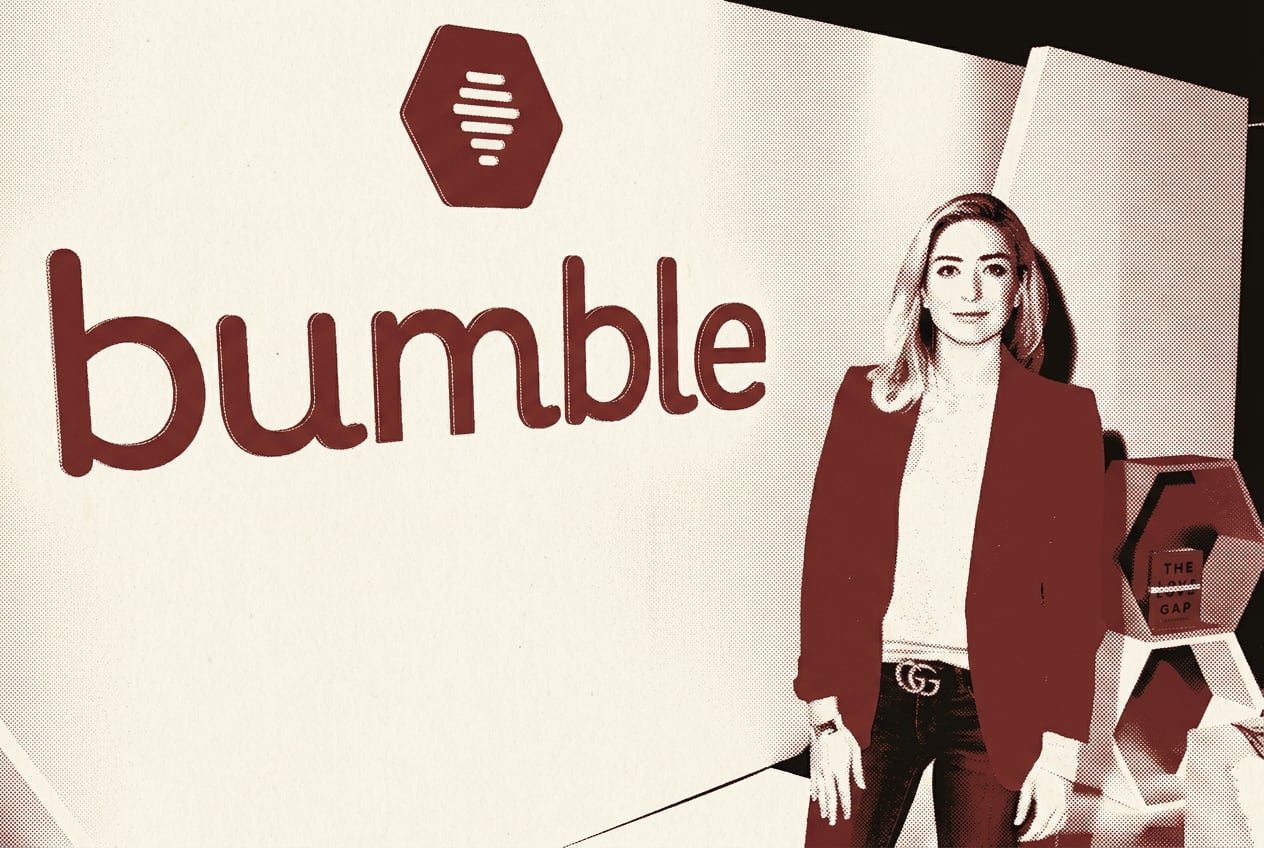
umble is for sale.
Reuters reported on June 26 that the company has hired Morgan Stanley to explore a sale, with Blackstone among the parties that have looked. Bumble went public in February 2021 at a valuation of roughly $7.7 billion. Whitney Wolfe Herd stepped back, then came back to run it. The company has cut close to a third of its staff. Its market value now sits at a fraction of where it started.
The numbers underneath the headline are worth reading carefully. Revenue fell about 10% in 2025 to roughly $966 million. Paying users were down around 11% across the year and down about 20% in the first quarter of 2026. Those are not the numbers of a company that lost a feature war. They are the numbers of a company whose product stopped being worth paying for, at scale, faster than it could fix it.
Most of the commentary you will read this week treats that as a verdict on dating. It isn't. It's a verdict on one execution of dating, and it is about to produce something this industry has not had in years: a real price.
The M&A window for distressed incumbents is opening, not closing
For most of the last cycle, nothing in dating traded. Sellers held out for 2021 multiples. Buyers refused to underwrite churn they could not model. Nothing cleared, so nobody had a comparable, so the next deal stalled on the same argument. The category froze.
A Bumble process breaks that. Whatever it clears at, and whoever ends up buying it, the market gets a number for what an at-scale dating brand with declining payers is actually worth in 2026. Every board, every lender, and every founder holding out for a valuation from a different era now has to price against that number.
That is uncomfortable if you were hoping to sell into the old multiple. It is genuinely useful if you want to buy, or if you want to sell and have spent two years unable to find a buyer willing to name a figure. Deals follow comparables. The category is about to get one.
The demand never left. The delivery mechanism broke.
Hold on to that, because it is the whole read. People still pay for connection. What they stopped paying for is a swipe deck with a paywall in front of it. Bumble's payer decline is not evidence that the market shrank. It is evidence that one delivery mechanism aged out while the demand stayed exactly where it was. I made the same argument from the funding side in the funding conversation, and the Bumble process is that argument showing up on a balance sheet.
You are probably not who buys Bumble. But you benefit if someone does.
Let's be plain about the buyer set. A transaction at this size is private equity, a strategic with real balance sheet, or a consortium. If you are running a dating business doing single-digit or low double-digit millions, you are not in that room, and you should not spend a week pretending otherwise.
You still benefit, in three specific ways. A buyer that takes Bumble private will cut marketing hard in year one, which takes real bid pressure out of the channels you compete in. A distressed process pulls talent loose. And a completed deal tells lenders and investors that dating assets are financeable again, which is the condition every smaller transaction in this category has been waiting on.
Nobody buys a distressed incumbent for its product vision. They buy installed base and brand at a discount. The white space stays unclaimed.
That is the part operators consistently misread. An acquirer paying a discount for scale is buying users and a name, and then running the asset for cash. They are not buying the next format. Whoever ends up owning Bumble will spend their first two years on cost, retention, and monetization discipline, not on inventing what comes after the swipe. That job is still open, and it is open to you.
The move

- Document clean unit economics now · Cohort retention, payback period, and contribution margin by channel, in a form a diligence team can read without a call. In a market repricing on payer quality, the operator who can prove their numbers gets the meeting. The one who can only describe them does not.
- Watch who buys, and what they say about why · The buyer's stated thesis is the most honest signal you will get all year about how capital is underwriting dating. Cost story, cross-sell story, or turnaround story: each one tells you something different about what your business is worth.
- Do not take the wrong lesson · Bumble struggling is not proof that dating is unbuildable. It is proof that a specific format aged out at scale. Those are different conclusions and they lead to very different decisions about the next two years.
There is a version of this week where every operator reads the headline, decides the category is finished, and quietly slows down. That would be the expensive mistake. The tourists left in 2024. The incumbents are contracting now. The demand is still there and still paying.
This is not a funeral. It is price discovery. Pay attention to the number it clears at, because that number is going to set the terms for every deal in dating for the next two years, including yours.
Key takeaways
- 01Bumble's decline reflects one execution of dating, not the end of the category.
- 02A public sale sets a visible comparable, which drags private asking prices down to something buyable.
- 03Distressed incumbents sell users, brands, and payment relationships that are cheaper to buy than to build.
- 04You do not need to be the buyer of Bumble to benefit from the price it sets.
- 05Prepare now: know your funding capacity, your integration plan, and the two or three assets you would actually want.
Reviewed by an operator. Last updated July 30, 2026. High Intent is led by founder and CEO Bill Alena, backed by a team of industry experts with over 100 years of online dating experience between them.
Questions operators ask
Paying users are falling at several large incumbents, but the category is not disappearing. Demand shifted toward niche, community-led, and creator-adjacent products, and away from large general-purpose swipe apps. Smaller operators with lower cost bases are still growing profitably in that space.

Bill Alena
Bill Alena is the founder and CEO of High Intent Media. He has spent twenty-five years building and investing in dating companies, on both sides of the table.
He built myYearbook's revenue from $0 to $100M+ as Chief Revenue Officer. He ran all monetization at The Meet Group (NASDAQ: MEET) and helped grow it through four acquisitions. As Chief Investment & Growth Officer at Social Discovery Group, he grew revenue from $200M to $350M and led the company's M&A practice and a dating-only venture fund.
He founded High Intent to give operators in the dating industry the honest news, the platform, the services, and the capital they have never had access to from one place. He writes The Editorial weekly, on the business of dating, from an operator's chair.
Daily industry headlines, curated for operators.
M&A, funding, product, policy, and earnings. Free to read, never sponsored.